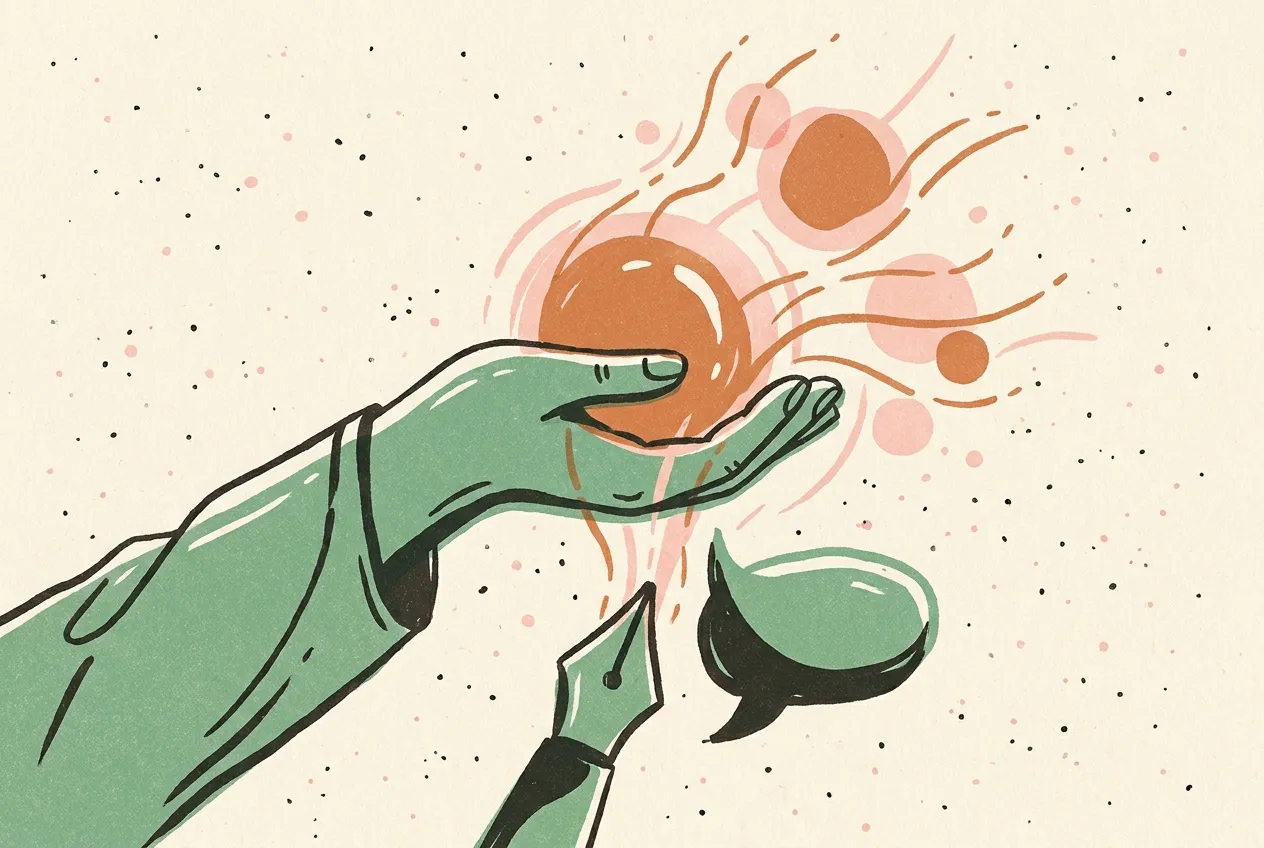
When you work with AI, you play five roles. Most people blur them.
 Nina Brenes··6 min read·Updated Aug 2026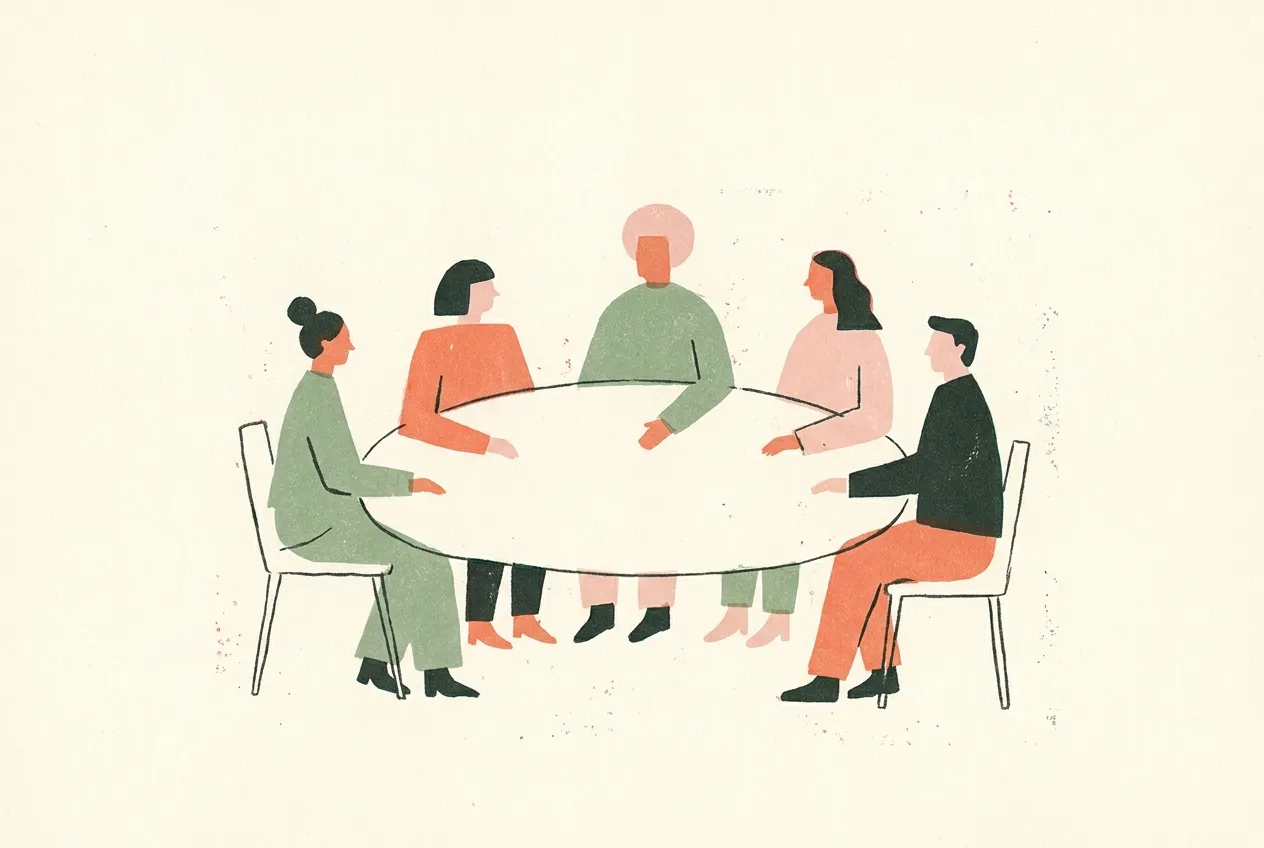
Key takeaways
- As a solo expert you play five roles yourself: you set the direction, you design the method, you hold the knowledge, you check the result, and you are the user who lives with it. AI is only the drafter.
- Trouble comes from blurring the roles, not from the technology: handing your judgment to the drafter, or drafting when you should be deciding.
- AI never gets the knowledge role or the judgment role. Those two stay with you, always.
- Naming which hat you are wearing is how you turn scattered AI use into a repeatable way of working. The role framing draws on the AMP program (runonamp.com).
When you are the expert and the whole business at once, there is no org chart to hide behind. Every role in your work with AI is played by you, except one. The trouble is that these roles are not labeled, so you slide between them without noticing, and that is almost always where AI work quietly falls apart, far more than the model itself. Most AI efforts do stall: RAND found that more than 80% of AI projects fail, about twice the rate of ordinary IT projects (RAND Corporation, 2024). The tools are rarely the reason. The blur is.
So it helps to name the roles out loud and see which one you are in at any moment. The role framing here draws on the AMP program (formerly The AI Exchange), where I certified as an AI Operator, reworked for the person who wears every hat alone. There are five. You hold four of them. AI holds exactly one, and it is not the important one. Read these as hats you put on and take off across a single afternoon, not as people.

The five roles you play
1. The director: you set the direction
This is the hat that decides what is even worth doing with AI and what good would look like if it worked. It is the hat you skip most, because it is tempting to open a chat and start typing. Put it on first. Name the outcome before you name the task. Two minutes here saves an afternoon of drafting toward nothing.
2. The method designer: you write down how the work is done
This is the hat that takes the method living in your head and turns it into steps AI can follow. It is the least glamorous role and the one that actually changes your week, because it is where scattered prompting becomes a repeatable way of working. Say you are a consultant with a way of turning discovery notes into a proposal. The designer is the you who writes that way down, so it stops living only in your memory.
3. The drafter: this is AI, and only this
This is the one seat AI holds. It gathers, structures, and produces the first pass from the method you designed. It is fast, tireless, and confidently wrong now and then, so it is an assistant, never the last word. When you feel yourself trusting the draft because it reads well, that is the moment to take this hat off and put on the next one.
4. The expert: you hold the knowledge and the judgment
This is the hat AI can never wear. It carries the hard-won knowledge that tells you what the draft means, what to keep, what is subtly off, and what only you would notice. Imagine a doctor reviewing an AI-drafted patient summary: the draft can be tidy and still miss the one detail that changes the plan. Catching that is not editing. It is judgment, and it is the reason your work is worth paying for. This hat runs on rested attention, so it is worth protecting the focus it needs.
5. The user: you are the one who lives with the result
This is the hat that has to actually use what you built, week after week. If a workflow is clever but annoying, the user in you will quietly abandon it, and all the design work evaporates. So judge your own systems by whether you keep reaching for them, not by how impressive they looked the day you made them. Adoption of one is still adoption.
How it breaks: wearing the wrong hat
Trouble almost always comes from blurring two of these roles, and in the moment it never feels like a mistake. It feels like being efficient. The same failure modes show up again and again:
- You draft before you direct, so you produce a polished answer to a question that was never worth asking.
- You let the drafter hold your judgment, accepting the draft because it reads well instead of because it is right.
- You keep re-drafting by hand instead of putting on the designer hat and writing the method down once.
- You build an elaborate system the user in you never actually adopts, so all the effort quietly evaporates.
The two roles that never leave you
Notice that AI only ever holds the drafter's seat. The knowledge and the judgment, roles four and one wrapped together, stay with you no matter how good the tools get. That is not a limitation to fix. It is the whole point: AI carries the mechanical layer so you have room for the part only you can do. Name which hat you are wearing, and most of the confusion around AI simply clears.
FAQ
What roles do I play when I work with AI as a solo expert?
Five, and you hold four of them: the director who sets the direction, the method designer who writes down how the work is done, the expert who holds the knowledge and judgment, and the user who lives with the result. AI plays only the fifth, the drafter that produces the first pass.
What role does AI actually play?
AI is the drafter, and only the drafter. It gathers, structures, and produces a first pass from the method you designed. It never holds the knowledge or the judgment, so treat it as a fast assistant whose work you always check, not as a decision-maker.
Why does my AI work stall even when the tool is good?
Usually because you blurred two roles. You drafted before you decided what was worth doing, or you accepted a draft because it read well instead of because your judgment approved it, or you kept re-drafting by hand instead of writing the method down once. The tool is rarely the problem.
Which roles should never go to AI?
The knowledge and the judgment. AI can gather and draft, but it cannot tell you what the result means, what to keep, or what is subtly off in your field. Those stay with you no matter how good the tools get, and they are exactly why your work is worth paying for.
Nina Brenes
AI partner for thoughtful experts · Founder of The Harmony Labs
Nina helps thoughtful experts turn what's in their head into AI-powered work that still sounds like them. She reads the research, tests the tools, and sits in the conferences so the people she works with get the short version: what is real, what to try this week, and what to ignore. Her focus is practical judgment, not hype.
Connect on LinkedIn