How to actually tell AI what you want, so you are not fighting it all day.
 Nina Brenes··6 min read·Updated Aug 2026
Key takeaways
- MASTER stands for Markdown, Act as a, Specific, Thoughtful about Threads, Examples, Refine.
- The biggest lever is being Specific: give context and success criteria, like briefing a very smart intern.
- Refine means going back to edit the original prompt until it's a reusable asset, not another disposable chat.
- MASTER is AMP's prompting framework (runonamp.com), used in Nina's AI operations practice.
The MASTER Method is a six-part way to tell AI exactly what you want, so you get something usable the first time instead of fighting it all afternoon: Markdown, Act as a, Specific, Thoughtful about Threads, Examples, Refine. And yes, I hear it constantly, “prompting” is a trick that's about to die. Yes and no. The weird hacks will die, and good riddance. But knowing how to say clearly what you want will matter right up until the day AI can read your mind. It matters more than people admit: in a Udacity survey of 2,000 professionals, 3 out of 4 workers said they regularly abandon AI mid-task, most often because the output lacks accuracy or quality (Udacity, 2025). That's not the AI failing you. That's a briefing problem, and a briefing problem is fixable.
MASTER is AMP's prompting framework (formerly The AI Exchange), where I certified as an AI Operator, and it's still the one I reach for every day. It isn't a bag of tricks. It's the fundamentals of controlling what AI generates. Six pieces.
Markdown, Act as a, Specific
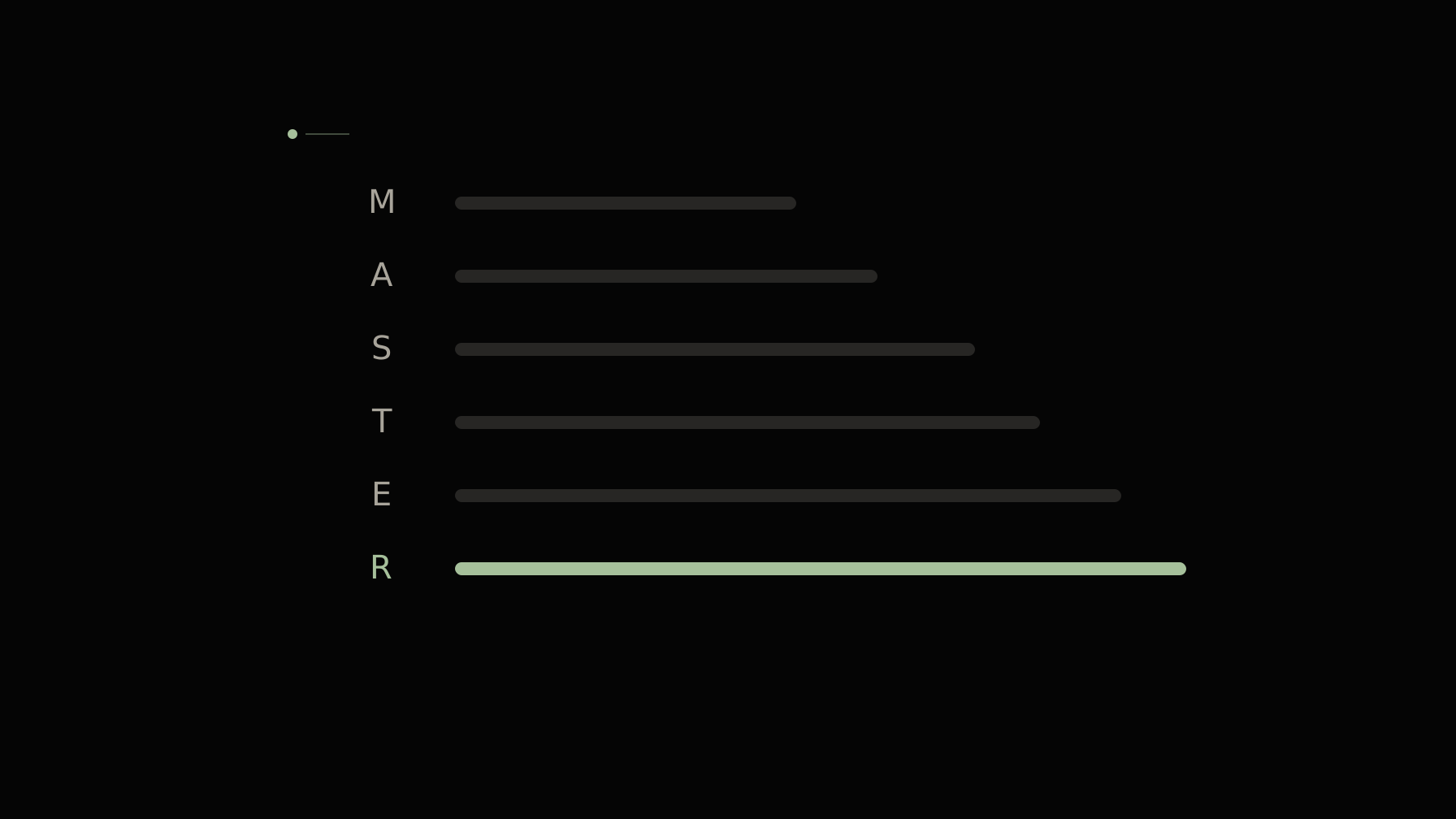
M, Markdown: AI was trained on structured text, so it responds to hierarchy, headers, and lists. Give it shape and it follows the shape. A, Act as a: open with “act as a world-class journalist” and it primes itself toward that register, predicting sharper answers. S, Specific: the big one, the lever that moves everything else. AI does not read minds. Brief it the way you'd brief a very smart intern who knows nothing about your situation, with context and a clear picture of what “done well” means, down to length, format, and reading level.
Threads, Examples, Refine
T, Thoughtful about Threads: one task per conversation. Pile several topics into the same thread and the AI starts predicting from contradictory context, and quietly gets worse. E, Examples: do not only describe what you want, show it two or three examples of what good looks like, and it will imitate them closely. If you are an educator, that means pasting two lesson plans you are proud of before you ask for a third. R, Refine: this is the one people skip. When the answer is off, resist the urge to pile on follow-up messages. Go back to the original prompt, edit it, run it again. That is the move that turns a prompt from a one-off into a reusable asset you can run again next week without rebuilding it.
- Markdown: give it shape with headers and lists.
- Act as a: hand AI a role to step into.
- Specific: context plus a clear picture of good.
- Threads: one task per conversation.
- Examples: show what good looks like, don't just describe it.
- Refine: edit the prompt until it becomes an asset.
MASTER does not live alone
It's the piece that goes inside each step of a playbook. Both frameworks, MASTER and playbooking, come from AMP (runonamp.com); together they're how you move from chatting with AI to delegating whole processes that actually run without you.
FAQ
What is the MASTER method for prompts?
MASTER is a prompting framework from AMP: Markdown, Act as a, Specific, Thoughtful about Threads, Examples, Refine. It is a set of fundamentals for communicating with AI so it reliably produces what you want.
How do I write a good prompt for ChatGPT or Claude?
Structure it with markdown, give the AI a role, be specific with context and success criteria, keep one task per thread, add examples, and refine the original prompt instead of chatting endlessly. That is the MASTER Method.
What is the most important thing when writing a prompt?
Being specific. AI cannot read your mind, so give it context and a clear definition of success, the way you would brief a smart intern who knows nothing about your situation. That single move improves most outputs.
Why should I rewrite the prompt instead of continuing to chat?
Because editing the original prompt turns it into a reusable asset you can run again next week, while endless follow-ups stay a one-off. Refining is what sets you up to fold the task into a repeatable playbook later.
Nina Brenes
AI partner for thoughtful experts · Founder of The Harmony Labs
Nina helps thoughtful experts turn what's in their head into AI-powered work that still sounds like them. She reads the research, tests the tools, and sits in the conferences so the people she works with get the short version: what is real, what to try this week, and what to ignore. Her focus is practical judgment, not hype.
Connect on LinkedIn