Most people quit at the same spot on the AI learning curve
 Nina Brenes··6 min read·Updated Aug 2026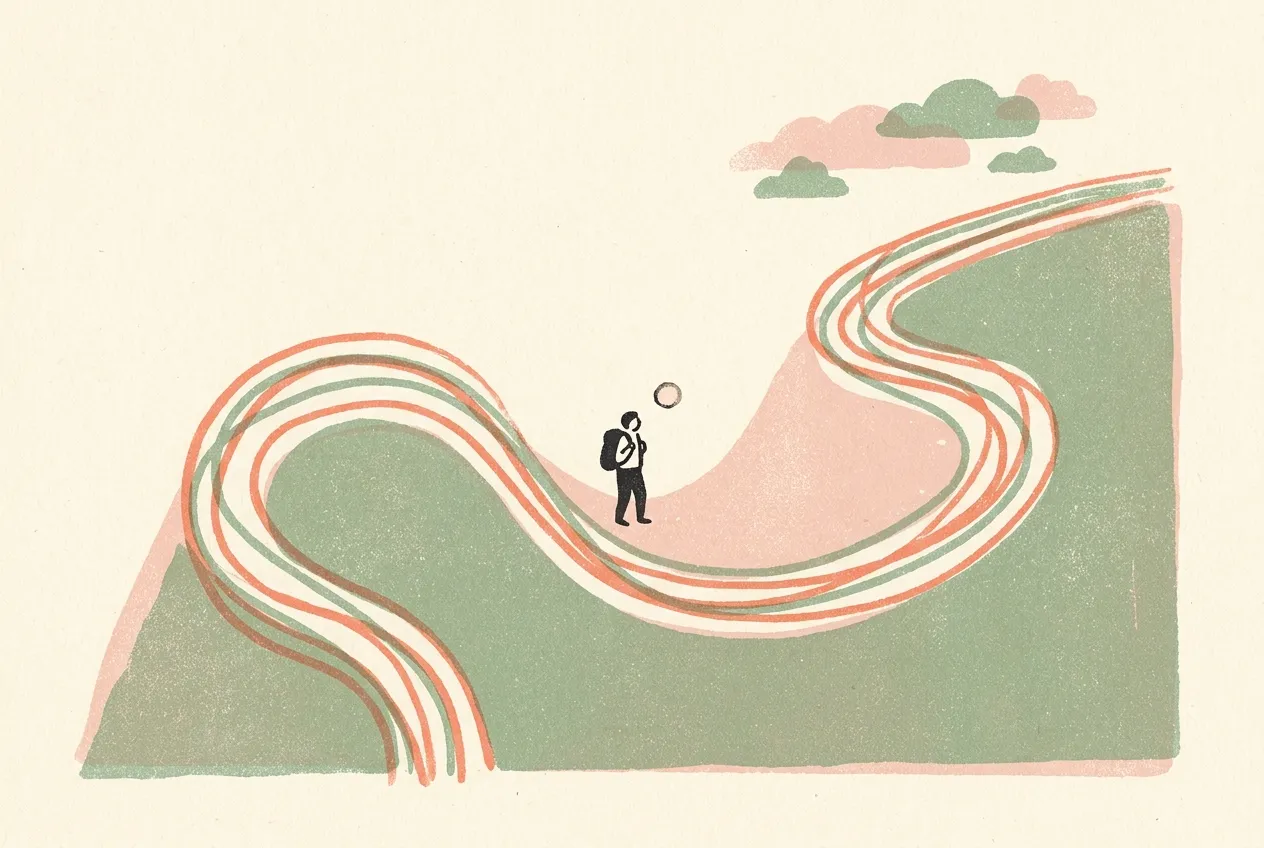
Key takeaways
- The AI learning curve goes from curious beginner, to a quick wow, to a discouraging "wait, what??" dip a few hours in, and then to daily user.
- Most people quit right at the dip, at the exact spot where quitting feels most reasonable. That is not a you problem, it is the shape of the curve.
- The dip is where the tool stops being novel and starts feeling like it was not built for you. It passes.
- In PwC's 2025 Global Workforce survey of nearly 50,000 workers, only 14% use generative AI daily. The daily users are the ones who got through the dip.
- The way through is not more willpower, it is a couple more hours of low-stakes reps on real work you already have to do.
The same moment tends to happen to almost everyone who tries AI. You start out delighted. It just saved you an hour. Then, a few hours later, the feeling flips: it is not that impressive, maybe this is not for you. It is easy to read that as the tool's limit. What you have actually hit is the dip. The AI learning curve runs the same way for most people: curious at first, a quick wow, then a discouraging "wait, what??" where it feels worse, not better. That dip is exactly where most people quit. It is not a you problem, it is the curve, and the useful part is right on the other side of it.
What does the AI learning curve actually look like?
It is the predictable emotional arc of getting good with AI: a short climb into excitement, a dip where it disappoints you, and then a plateau where it quietly becomes part of how you work. It moves in stages, and the stages feel wildly different from the inside than they look on a graph.
- Curious beginner. You open it, you poke around, you are a little skeptical and a little intrigued.
- The wow. It does something in ten seconds that would have taken you an hour. You tell a friend.
- The dip: "wait, what??" A few hours in, it gets something confidently wrong, or gives you bland mush, or just stops feeling like magic. This is where it feels like it was not built for you.
- Daily user. You have learned how to talk to it and what to hand it, and it just runs alongside your day.
Why does everyone quit at the same spot?
Because the dip arrives right on the heels of the wow, so the contrast stings. You had a moment where it felt like magic, then it fumbled, and your brain files that as "this is not for me" instead of "I have not learned to drive it yet." That read is completely human. It is also wrong. The dip is not the tool failing you. It is the exact spot where you stop being a spectator and have to start learning how it thinks. The magic was passive. What comes next is a skill, and skills always feel worse before they feel better.
One number worth sitting with: in PwC's 2025 Global Workforce survey of nearly 50,000 workers across 48 economies, only 14% use generative AI daily (PwC, 2025). Nearly everyone has tried it. Only a small group made it to daily. The gap between those two is not talent, and it is not access. It is who kept going through the dip and who closed the tab.
The reassuring part
You do not have to be a tech person to get through the dip. You just have to keep going for a couple more hours instead of closing the tab. The people who use AI every day are not smarter than you. They just did not quit at the exact spot where quitting feels most reasonable. That is the whole difference. It is almost unfairly small.
How do I actually push through the dip?
Not with more willpower. With a couple more hours of low-stakes reps on real work you already have to do. Stop trying to make it impressive. Make it useful and small, so the wins are quiet and the failures cost you nothing.
- Give it context, not just a command. Tell it who you are, who it is for, and what good looks like. Half of the dip is that you were being too vague.
- Use it on boring, real tasks first. Clean up an email, sort messy notes, draft a first version you will edit. Let it earn your trust on low stakes.
- Expect to correct it, out loud. Tell it what was off and ask again. That back-and-forth is the skill, not a sign you failed.
- Give it two more hours before you decide. Not two more months. Just past the dip.
So if you are right at the part where AI feels worse than you hoped, that is not the end of the story. It is the middle, and it is the same middle everyone hits. Stay two more hours. The daily-user part is on the other side, and it is quieter and steadier and honestly better than the wow ever was. The wow was a trick of novelty. What waits past the dip is a tool you actually know how to hold.
FAQ
What is the AI learning curve?
The predictable emotional arc of learning AI: curiosity, a quick wow, a discouraging dip where it disappoints you, and then daily use. Most people quit at the dip.
Why does AI feel worse a few hours in?
Because the dip lands right after the wow, and the contrast makes a normal mistake feel like proof it is not for you. It is the spot where you start actually learning to drive it.
Am I just bad at AI?
No. Almost everyone quits at the same spot on the curve. It is the shape of the curve, not a verdict on you. Two more hours of low-stakes practice usually gets you past it.
How long until AI clicks?
For most people it is a matter of hours, not weeks, once they push past the dip and start giving it context and correcting it out loud on real tasks.
Nina Brenes
AI partner for thoughtful experts · Founder of The Harmony Labs
Nina helps thoughtful experts turn what's in their head into AI-powered work that still sounds like them. She reads the research, tests the tools, and sits in the conferences so the people she works with get the short version: what is real, what to try this week, and what to ignore. Her focus is practical judgment, not hype.
Connect on LinkedIn