You've had AI open all day. Did anything actually move?
 Nina Brenes··6 min read·Updated Aug 2026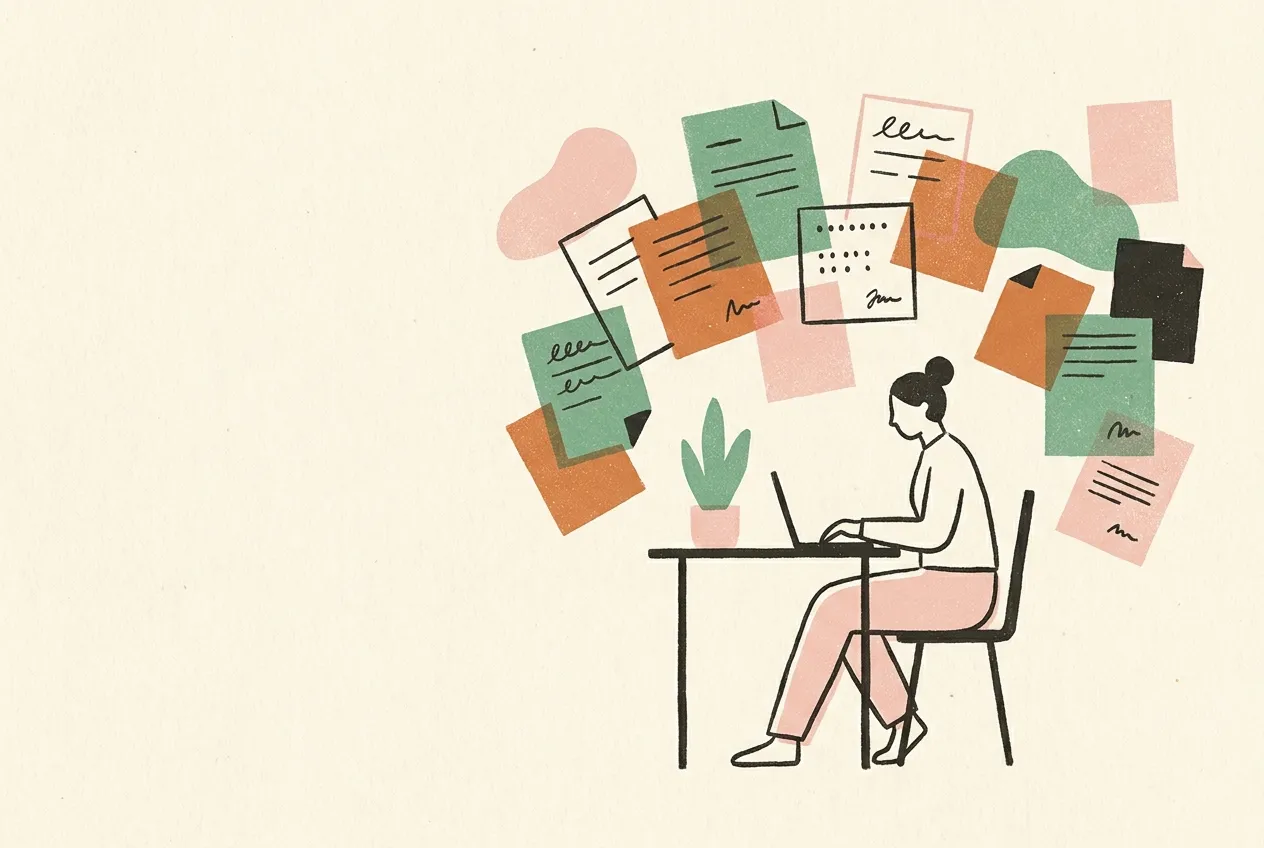
Key takeaways
- Procrastination productivity is staying busy with AI all day, generating artifacts, while nothing on your real goals actually moves.
- The 2023 story was "adopt AI." That story is over. The edge now is what you actually do with it, not the fact that you have it.
- In PwC's 2025 Global Workforce survey of nearly 50,000 workers across 48 economies, only 14% use generative AI daily.
- A workflow is still tied to a tool and a task. A system starts from your real goals and runs AI as one connected part.
- The end-of-day test, asked honestly: did a real goal move today, or did you just make artifacts?
- Used as a system and a thinking partner, AI makes you an augmented professional, not someone drowning in open tabs.
Short answer: probably not, and this is not a you problem. You might recognize the feeling. AI has been open since morning, you have asked it for this and then that, a stack of documents has quietly piled up that you have barely read, and it all feels unmistakably like work. It usually is not. Call it procrastination productivity. A lot of thoughtful, capable people are running some version of it without realizing. The fix is not more AI. It is thinking in systems instead of prompts.
What is procrastination productivity?
Procrastination productivity is when you stay busy with AI, generating artifacts and asking questions all day, while nothing on your actual goals moves. You feel productive because your hands are full and the screen keeps filling. But the outputs do not connect to each other, half of them never get read, and none of them add up to momentum. It is the oldest kind of procrastination wearing a very modern outfit: the illusion of progress, dressed up in a chat window.
Here is the pattern worth naming. The 2023 story was "adopt AI," and for a while, just being on it was the whole edge. That story is over. Everyone is on AI now, everyone has a tab open. So having the tool is not the advantage anymore, any more than having email was an advantage by 2005. The edge has quietly moved to what you actually do with it.
And right now, here is the shape of most people's day: open the tool, ask it for X, ask it for Y, skim the answer, ask it for Z. By evening you have documents, outlines, drafts, a dozen open threads. It looks like a lot, and it feels like a lot. But none of it connects to anything. It is not a system. You spent the day talking to the tool, not building on your real goals. It is easy to walk away convinced you have become an expert because you automated a pile of busywork. But you can automate an enormous amount of busywork and still not have touched the work that matters.
Isn't a "workflow" the answer?
Not quite, and this is where the distinction matters. Most people hear all this and immediately reach for "workflows." It is a step in the right direction, but it does not step back far enough. A workflow is still bolted to a tool and a task. Build your whole way of working around whatever tool is hot this quarter, and you are one product update away from starting over from scratch.
You have to zoom out past the tool entirely. Get tool-agnostic and think in systems. A system is the thing underneath the tool: your real goals, the connected pieces that carry you toward them, and AI running inside that as one part, not as the whole point. When AI is wired into a system aimed at what you actually care about, it stops keeping you busy and starts building momentum. Same tool. Completely different result.
One number worth sitting with: in PwC's 2025 Global Workforce survey of nearly 50,000 workers across 48 economies, only 14% use generative AI daily (PwC, 2025). So the people who are on it every single day, and that is likely you, are already a small, self-selected group. Which means the question was never whether you use it. It is whether it is moving anything.
How do I know if I've crossed the line?
Ask yourself one honest thing at the end of the day: did a real goal move, or did you just make artifacts? If you cannot point to something that genuinely advanced, you spent the day in procrastination productivity. That is the tell, and it is a kind one, because the way out is small and boring, in the best possible sense.
- Start from the goal, not the prompt. What are you actually trying to move this week?
- Connect the pieces. If an output does not feed the next step, you never needed it.
- Read what it gives you. If you are not reading it, you are not thinking, you are just generating.
- Keep the human work human. The judgment, the taste, the deciding what to leave out, all of that stays yours.
The other half of this
Used the right way, AI is a genuine thinking partner. It can make you sharper at the things you are already good at, and it can carry the mechanical work so more of your day lands on what only you can do. You become an augmented professional, someone whose real work is amplified, not someone drowning in tabs. AI is astonishingly good at the mechanical layer of your work; it cannot touch the layer where meaning lives. The judgment stays yours.
So if you have had AI open all day and something feels quietly off, take the guilt off the table. It is not a you problem. It is a systems thing, and systems things are fixable. Close a few of those tabs. Pick one goal that actually matters this week. Point the tool at that, and nothing else. That is where the momentum was hiding the whole time.
FAQ
What is procrastination productivity?
Staying busy with AI all day, generating artifacts, while nothing on your real goals advances. It feels productive; it is not.
Systems or workflows, which one do I need?
A workflow is still tied to a tool. A system starts from your goals and uses AI as one connected part. Start from the system, so a product update cannot send you back to zero.
How do I know if I am stuck in the illusion of productivity?
At the end of the day, ask whether a real goal moved or you only made artifacts. If it is the second, you crossed the line.
Is AI itself the problem?
No. Used as a system and a thinking partner, AI makes you an augmented professional. The problem is using it one disconnected prompt at a time.
Nina Brenes
AI partner for thoughtful experts · Founder of The Harmony Labs
Nina helps thoughtful experts turn what's in their head into AI-powered work that still sounds like them. She reads the research, tests the tools, and sits in the conferences so the people she works with get the short version: what is real, what to try this week, and what to ignore. Her focus is practical judgment, not hype.
Connect on LinkedIn