Design your environment to focus, don't rely on willpower
 Nina Brenes··6 min read·Updated Aug 2026
Key takeaways
- Environmental design means shaping your surroundings so the focused choice is the easy one. Willpower runs out by mid-afternoon. A good setup doesn't.
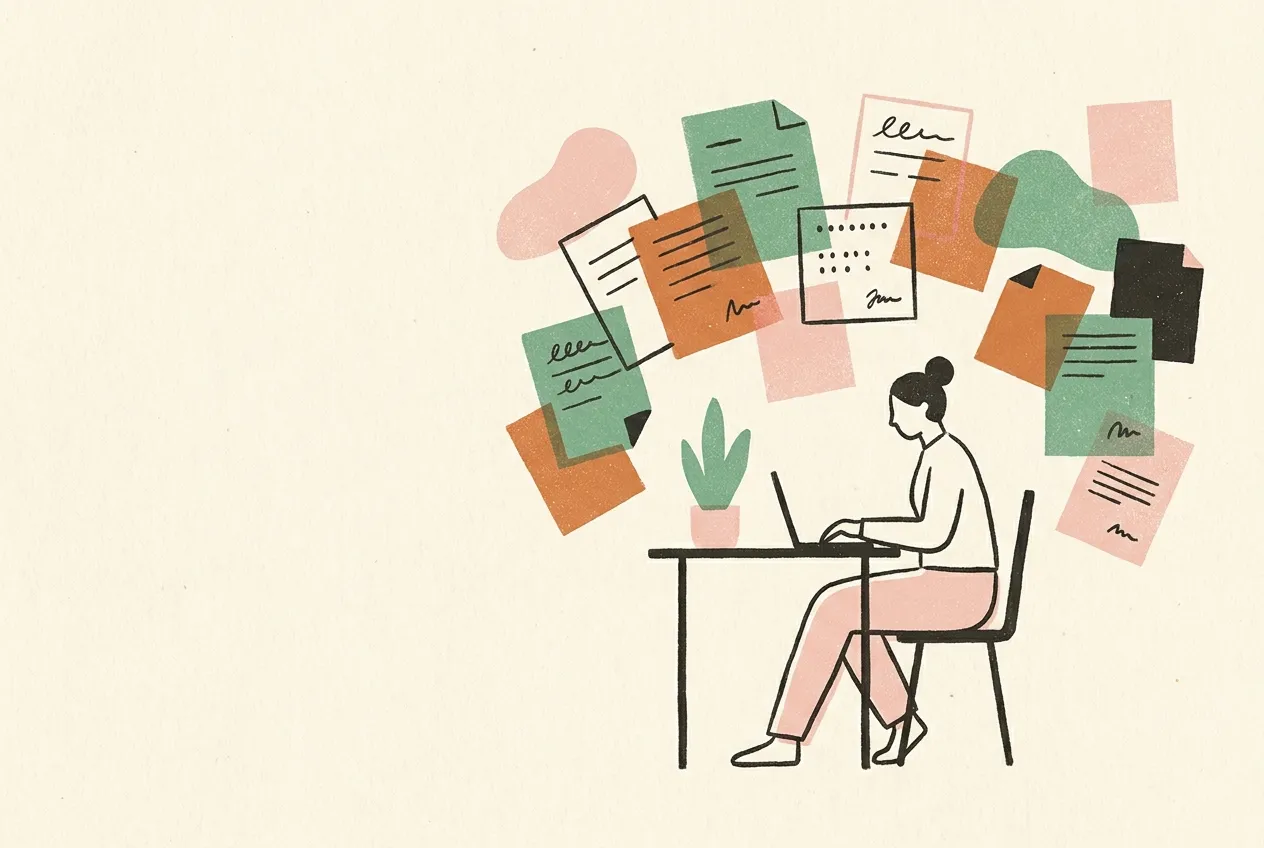
- In one observational study, office workers switched tasks or were interrupted roughly every 3 minutes, and it took about 23 minutes to return to the original task (Gloria Mark).
- Small friction changes the outcome: add friction to the distraction, remove friction from the work.
- Cues drive behavior. A visible phone or an open inbox tab is a standing invitation to switch.
- Design your digital environment so AI is a place you go on purpose to reduce noise, not another always-open tab pinging you.
Picture the last time you sat down to do the one thing that mattered and looked up an hour later having done six other things instead. You did not decide that. Your environment decided it for you, one glance at a time. If you keep losing focus, it is almost never a discipline problem, it is a setup problem. Environmental design means arranging your space and your screens so the focused choice is the path of least resistance and the distracting one costs effort. Willpower runs out by mid-afternoon. A well-designed environment does not. That is not a you problem, and it is fixable with a few small moves.
What is environmental design for focus?
It is shaping your surroundings so the behavior you want becomes the easy default. It is the same idea as choice architecture: you do not fight the impulse to check your phone, you put the phone in another room so the impulse costs you a walk. Your behavior follows your setup far more faithfully than it follows your intentions, and no amount of resolve changes that. So you stop negotiating with the impulse and change the setup instead.
Why does context switching cost so much?
Because your attention does not teleport, it has to climb back up. In Gloria Mark's often-cited observational research on information workers, people switched tasks or got interrupted roughly every 3 minutes, and once knocked off a task it took about 23 minutes on average to get fully back to it. Sit with that ratio for a second. You get interrupted every three minutes, and it takes twenty-three to recover, which means for most of the day you are never actually all the way there. Every casual glance at a notification is not a 10-second cost. It is the tax of rebuilding the entire context you were holding in your head.
How do friction and cues actually change behavior?
Two levers do most of the work. Friction is how much effort a choice takes; cues are the things in your field of view that quietly prompt a behavior before you have consciously chosen it. Add friction to the distraction, strip it from the work, and kill the cues that pull you off. That is most of the game, and it is more mechanical than motivational, which is exactly why it holds when your discipline does not.
- Add friction to distraction: phone in another room, log out of the app, delete the shortcut, use a site blocker during deep-work blocks.
- Remove friction from the work: open tomorrow's first task tonight, leave the doc on screen, keep one clean workspace you don't have to set up.
- Kill the cues: notifications off by default, a clear desk, one tab, not twelve. If you can see it, it's already asking you to switch.
Where does AI fit into a focused environment?
Here is the thread worth pulling. AI can go either way in your environment, and which way it goes is a design decision, not a personality trait of the tool. Used badly, it is one more always-open tab that pings you, another cue, another thing pulling your attention every few minutes. Used well, it is the opposite: a place you go on purpose to reduce noise. You batch the questions, let it clear the admin in one pass, and then you close it. AI is astonishingly good at that mechanical clearing; the judgment about what deserves your attention at all stays yours. Design your digital environment so it takes noise out, not so it becomes another source of it.
One place, on purpose
Give AI a job and a slot, not a permanent open tab. Let it clear the scattered small stuff in a batch so your screen gets quieter, then close it. The point of a system is fewer things pulling at you, not one more.
You do not need more discipline. You need an environment that stops asking you for it every three minutes. Move a few things, kill a few cues, give AI one job and one slot. The focus you have been trying to force with willpower mostly shows up on its own the moment the setup stops fighting you. It was never a character flaw. It was a room arranged against you.
FAQ
What is environmental design for focus?
Shaping your space and screens so the focused choice is the easy default and the distracting one takes effort, instead of relying on willpower.
How long does it take to refocus after an interruption?
In Gloria Mark's observational research, workers took about 23 minutes on average to return to a task after being interrupted, and got interrupted or switched tasks roughly every 3 minutes.
How do I stop AI from becoming another distraction?
Give it a job and a time slot instead of a permanent open tab. Batch your questions, let it clear admin in one pass, then close it, so it reduces noise instead of adding a cue.
- The Cost of Interrupted Work: More Speed and Stress (Gloria Mark et al.)University of California, Irvine
- Nudge: choice architecture and friction (Richard Thaler and Cass Sunstein)BehavioralEconomics.com
Nina Brenes
AI partner for thoughtful experts · Founder of The Harmony Labs
Nina helps thoughtful experts turn what's in their head into AI-powered work that still sounds like them. She reads the research, tests the tools, and sits in the conferences so the people she works with get the short version: what is real, what to try this week, and what to ignore. Her focus is practical judgment, not hype.
Connect on LinkedIn